
What to Expect · How to Prepare · FAQ

Using eSIMs or SIM Cards in China

eSIMs (Recommended)
For most travelers, an eSIM is by far the most convenient option. With fast domestic data, you’ll have maps, messaging, and translation at your fingertips. Most importantly, eSIM traffic goes through international gateways, which means you can access many of your apps without a VPN. Check if your phone supports eSIM, then purchase online before departure or directly through the Alipay app once you arrive. It’s best for travelers who need reliable data but don’t require a Chinese phone number.
SIM Cards
If your device does not support eSIM technology, pre-paid SIM cards are widely available, though you’ll need to link your passport to the phone number due to local regulations. You can also arrange one before you leave your home country for peace of mind.
Using a VPN in China
In addition to having internet access through a SIM card or eSIM, you may want to access international websites and apps that are restricted in China. In this case, using a VPN (Virtual Private Network) is essential. We recommend either ExpressVPN or Astrill – make sure to download and set it up before you arrive, as VPN sites are blocked inside mainland China.
International Roaming
The simplest—but usually most expensive—solution. If your home carrier offers roaming in China, you’ll connect as if you were still back home, keeping all apps and websites accessible. Just double-check the rates so there are no surprises.

WeChat: Think of it as WhatsApp, PayPal, Uber, and Instagram rolled into one. It’s China’s digital lifeline for chatting, paying, booking taxis, and even ordering food. Good news—WeChat Pay now works smoothly for international visitors, so you can use it just like locals do. WeChat is used by almost everyone in China now, from older people who are not digital native, to schoolchildren using a smartwatch.
Alipay: Another must-have payment app. With over 80% of daily transactions in China made via mobile, cash and even cards are becoming rare. From train tickets to late-night noodles, Alipay has you covered. It’s also the alternative of WeChat Pay.
DiDi: China’s version of Uber, complete with English interface and auto-translation for driver messages. Simply add your foreign card and you’re set. While we’re always available to assist with your transportation needs, DiDi is a convenient option if you decide to explore on your own.
Amap/Gaode Map: If you don’t have Apple Maps, which works in China, Amap (also known as Gaode map) is a great alternative. With over 1 billion users, it’s the most accurate and feature-rich map app in China, providing digital map, navigation, and real-time traffic information.
Duolingo: Why not learn a few phrases on the go? A little Mandarin turns every market, tea house, or village visit into a more authentic experience. This app offers free lessons, covering everything from basic phrases to writing Chinese characters.
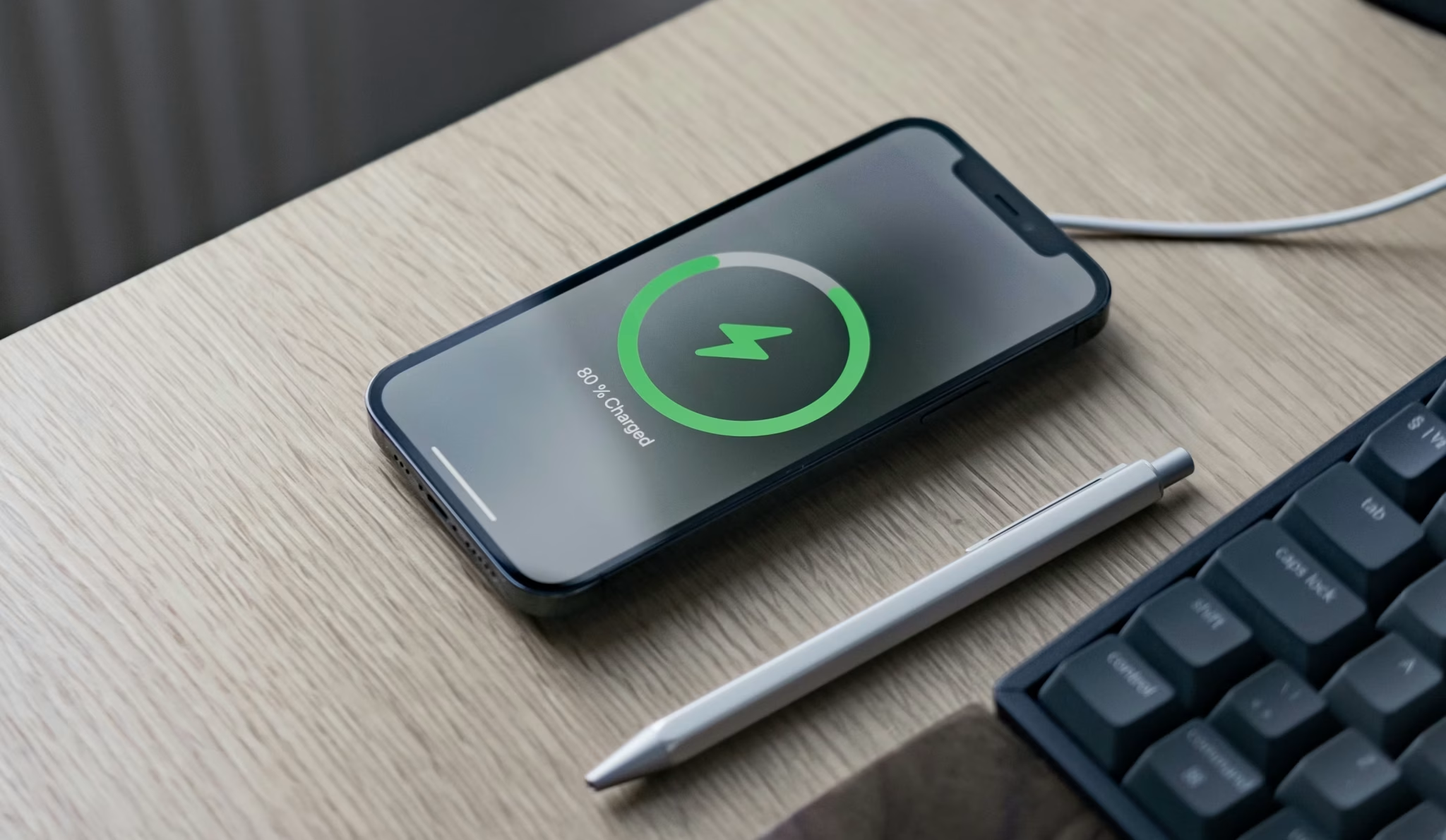
Mainland China uses 220V, 50Hz AC (with Hong Kong at 200V and Taiwan at 110V). Most outlets accept both US two-prong and Australian three-prong plugs, but a universal adapter is your safest bet. Laptops, phones, and cameras usually handle 110–240V, so no converter is needed. Be sure to check the voltage requirements of your appliances before leaving home.
Power Bank: Starting June 28, 2025, only power banks with a 3C certification sticker are allowed on domestic flights in China. Since most foreign power banks don’t qualify, we recommend renting or buying one locally. They’re everywhere—from airports to corner shops, easily rented via WeChat or Alipay.

Travel is more enjoyable when you’re healthy. Schedule a pre-trip checkup if you have conditions such as diabetes, high blood pressure, or heart and lung issues. Ask your doctor for a note listing your conditions and medications—it’s always useful.
Bring enough prescription medication for the entire trip (plus an extra week). Keep them in original packaging and carry essentials in your hand luggage. Refills in rural areas can be difficult. Based on years of experience, we also recommend packing anti-diarrheal medicine—new food, new water, and new routines sometimes bring along a sensitive stomach.

The golden rule: pack light. China has everything you could possibly need, and if you forget something, your guide will help you find it locally. What you shouldn’t leave behind: